
From our Massacre to the Birth of a “We”
A translation of the economist Mohammad Maljoo's article about the possibility of hope in the midst of violence in Iran

Over the past month and particularly in the 2 weeks or so when internet was cut in Iran, many academics, scholars, journalists who have spent a lifetime thinking and working on Iran worked hard to make sense about the events and bring their knowledge to bear on this moment. They presented a spectrum of thought: Some solely held the Islamic Republic responsible for what we all knew was going to be a violent response to the protests of Jan 8 and 9, some raised the brutal sanctions Iran has been under and the June war with Israel/US as the unbearable weight that broke the economy, many found their analyses at the intersection of both. As communication lines opened up, everyone was confronted with horrific images of the dead and the wounded. A fight broke out not just over the number of dead (4000? 40,000?) but whether it matters what the actual numbers are. Some outlets began disseminating testimonies in English and Persian of what happened during those 2-3 days when the IRI shot openly into crowds. The drumbeat of war got louder, then quieter, then louder. Lines were and are being drawn outside Iran and people accuse each other of this or that treacherous offense. Inside Iran people are trying to live while making sense of all of it. Everyone is mourning. The despair that led to the protests and the unprecedented killing of citizens has not abated but only gotten worse.
On these pages and many others (where else? we’re figuring it out), some friends and colleague and I hope to give space to analyses of the situation by academics, scholars, journalists who live and write in Iran. The goal is to present a wide range of opinions, not just things we agree with and to take these analyses with the seriousness that we take the ones produced by ourselves and which receive a wide audience in outlets such as CNN or New York Times or Democracy Now. We also hope to translate and publicize statements by various labor and student group and various public figures in Iran.
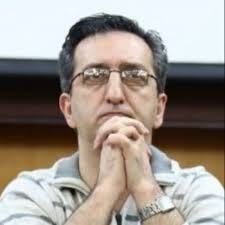
The first piece is by Mohammad Maljoo published on his Telegram account on January 26, 2026. It is translated and published here with his permission. Dr. Maljoo is a prominent progressive economist who lives and works in Iran. In November of 2025, he was part of the arrests and interrogation of a number of independent researchers for, in his case it seems, linking extremism in Iran to the Supreme Leader Ali Khamenei. I picked this piece because of the optimism coursing through his poetic writing. It is so rare these days. He is able, it seems, to not fully sink into despair but try to find a path of light in all this darkness. We might be persuaded. We might not. But I hope we will give it our time and thought.
From our Massacre to the Birth of a “We”
Why does a massacre sometimes put an end to protests, and at other times become the beginning of a new era? Dey 1404 [January 2026. I will refer to it as Dey from here on] is likely one of those moments in which blood will flow past the streets and enter the collective memory.
Before January, people’s pain mostly resided in their personal experiences; it was less felt collectively. Everyone carried the heavy burden of their life alone: inflation, unemployment, poverty, humiliation, exclusion, erasure, exhaustion. But now that the bullets have spoken, these isolated pains will very likely become intertwined, providing the raw material for the formation of one or many shared narratives.
Large segments of society have suddenly realized that the issue is not just bread or just freedom, but rather it’s human dignity that has become the target of bullets.
Those in power wanted to buy silence with violence. But violence, now that it is more naked than ever, has not produced silence; it has produced meaning. Fear first turned into grief; that grief is transforming now into moral fury; and moral fury will likely turn into awareness [aagaahi].
Those who were struck by bullets, their stories are not just news; they are documents—documents against an order that has wanted to present itself as innate and immutable. But in creating this meaning, violence is also releasing an emotional force that can either become moral awareness or lead to an explosion of vengeance.
In Dey, violence did not speak just from the side of the state. Calls for revenge, for attacks, for a violent response to the prevailing violence also echoed throughout the public sphere. These voices, while born of fury, placed society before two paths: one, transforming suffering into a conscious collective force; the other, slipping into a cycle that recognizes blood as the sole language of politics.
Many have realized that if the logic of bullets is answered with the logic of bullets, what is lost is not only lives, but the very moral superiority that exposes repression and the repressor. The government sought to disperse the crowds, but it has instead created a collective memory. Names will likely be written on walls; mourning will turn into a space for awareness; and people will see themselves not as spectators, but as carriers of a shared fate.
From within this self-awareness, new connections will likely form: mutual aid, empathy, companionship, solidarity—networks that quietly but steadily erode power. Now that blood has been shed on an unprecedented scale, the existing order appears far less palpable than before and far more scrutinized than ever. The political legitimacy of the government has been further eroded in the eyes of a larger segment of society because the boundary between the authorities and the people has been drawn in a blood darker than ever.
Even the most passive citizens have realized that when bullets replace a legal response, the law is no longer a refuge or a protector; its boundaries have collapsed ever more deeply into violence. Dey 1404 is an open wound, a bleeding wound—but it is precisely within this blood that society’s eyes have opened wider. The fire of violence has burned away the curtains and laid bare the face of power.
Many have learned that suffering can turn into awareness. But this fire has brought as much danger of burning as it has light: if anger is not restrained, it can devour the very light it created and plunge society back into darkness. Violence can produce awareness but responding to violence with violence can burn that awareness away.
The answer to the opening question is this: a massacre becomes the beginning of a new era when people see the truth of power in the spilled blood, yet do not allow anger to turn them into a mirror of the very logic of repression. If this blood does not lead to hatred and revenge but instead to awareness, then from within the massacre one can witness the birth of a living, united “we.”
You can find some of Mohammad Maljoo’s writings in English here: https://www.merip.org/author/mohammad-maljoo/
Pen America wrote about the November arrests here: https://pen.org/press-release/shocking-arrests-of-writers-in-iran/
He has recently published his telegram writings from between the June 2025 war and his arrest under the title Before the Destruction: A Manifesto for Survival [in Persian]