
Highway Robbery
"The dark days of internet shutdowns under the pretext of “security” for helpless people" by Yashar Soltani

Today’s translation is an investigative report by Yashar Soltani on one of the most important topics in Iran today: the continuing internet shutdown and the introduction of “Internet Pro,” which is a tiered internet access scheme introduced in April 2026 that provides selected users or organizations with full or less-restricted access to the global internet for a price. Since its introduction, several associations and unions such as the Iran’s Graphic Designers Society, Iranian Nurses’ Organization, Tehran University medical students’ group, Tehran Province Journalists’ Association, and Seman’s Bar Association have rejected and criticized the offer to gain access to global internet through Internet Pro on the basis that it is discriminatory, unethical, and basically the privatization of what should be a basic right in society.
In 2016, as editor of Memari News, an architecture and urban planning website in Iran, Yashar Soltani exposed immense corruption in Tehran municipality during Mohammad Bagher Ghalibaf’s time as mayor. He was subsequently arrested and put in solitary detention. (You can read about it here.) He was arrested again in 2019 and 2024.
The text below, published on his site, describes Iran’s internet not just as a technical system, but as a politically controlled infrastructure.1 As noted by Mr. Soltani, repeated internet shutdowns justified on “security” grounds have left most citizens cut off from the global web and forced onto restricted domestic platforms. In this environment, access to full, uncensored internet is treated like a premium commodity rather than a basic utility, creating a system where connectivity itself is stratified by cost, privilege, and political access. His crucial claim is that this structure is not an unintended side effect of regulation, but a system that concentrates control and economic gain in the hands of politically connected organizations while shifting the costs and restrictions onto ordinary citizens. For readers less familiar with the specific organizations mentioned in the piece, fear not! There are a lot of names of companies, foundations, and organizations but the most important part is to look at the linkages he draws between them and the ways in which they are benefiting from the imposed internet blackout in Iran.
This post is part of a collaborative effort to engage with perspectives and analyses from inside Iran. Many thanks to Yashar Soltani for giving me permission to translate it. I invite you to read them, incorporate them into your understanding of Iranian politics, and help distribute them widely.
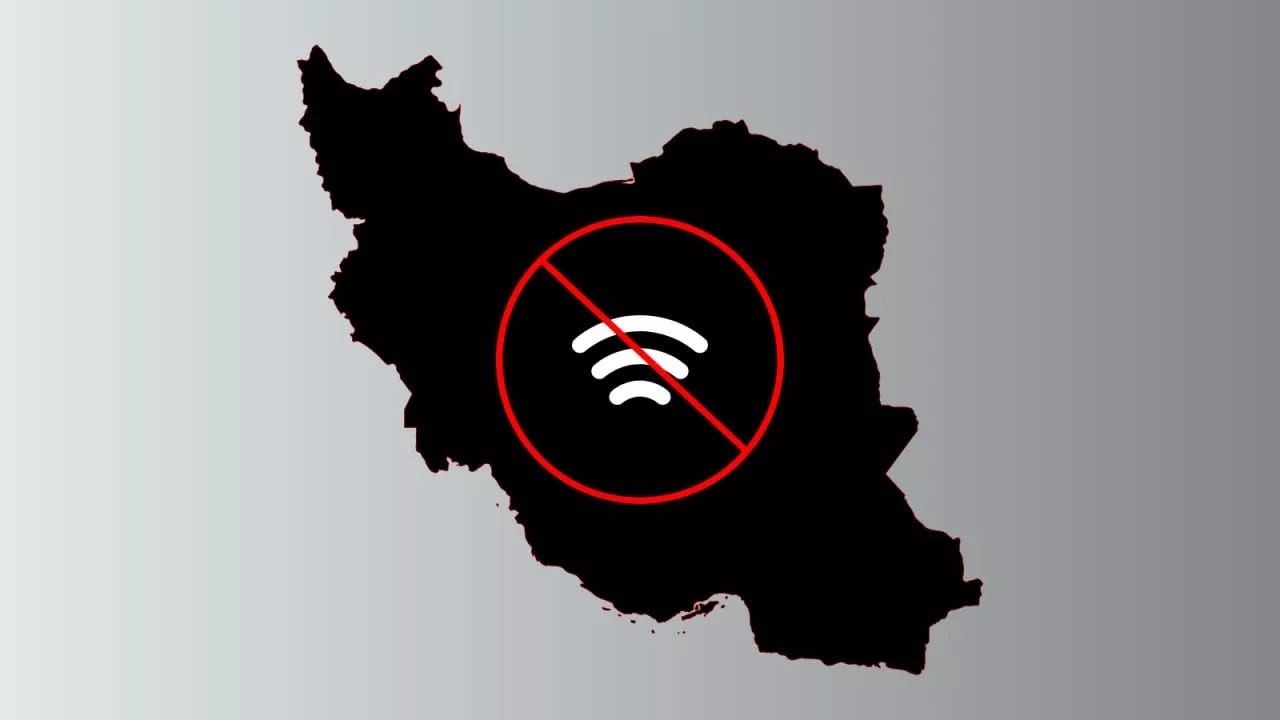
“Highway Robbery by the IRGC Cooperative Foundation2 and the Execution of Imam Khomeini’s Order3 in the service of Internet Pro” by Yashar Soltani
The Iranian public’s access to the internet has reached the state that hardliners had long wanted. Access to the global internet and its tools has been cut off, and 90 million Iranians are trapped inside a handful of inefficient domestic websites: from Iranian search engines that cannot meet even the simplest needs to messaging apps plagued by bugs and dysfunction. All these years of beating the drum about strengthening domestic capabilities have finally revealed their true result; an inflated elephant has ultimately given birth to a mouse.
The various statements about the future of the internet in Iran offer no clear picture except the addition of yet another major expense to the already high cost of living for Iranians. This is an expense that either is paid to the black market for VPN configurations or handed over as extortion money, a la old-time highway robbers, to Hamrah-e Aval [Mobile Communications Company of Iran, which is the country’s largest network operator] so that one can obtain “Internet Pro” and watch the world through a keyhole.
“Internet Pro”: Discontented Government, Content Shadow Government
The justification for cutting the internet is “security.” This keyword is shared by all officials who speak about internet shutdowns. But does anyone really believe this explanation? A simple example is comparing the prices of two internet products on the market.
A 50GB Irancell package that does not connect to the global internet can currently be bought for around 400,000 tomans [at this moment, the dollar is between 170-180K tomans]. You pay this amount so as not to connect to the global internet so that national security will not be endangered.
Yet at the same time, you can buy 50GB of “Internet Pro” from Hamrah-e Aval for 2.5 million tomans and gain access to the global internet. In other words, if you can bridge the gap between 400,000 and 2.5 million tomans, you and your internet access suddenly cease to be a threat to Iran’s security. Clearly, no one accepts this interpretation. Everyone understands that major profiteers have now reached an ocean of wealth and will not stop until they have fully exploited it.
Amid the chaos of Iran’s administrative and legislative systems, we see that the government [i.e. the executive branch], as the representative of the people, opposes tiered internet access [اینترنت طبقاتی, the term used in Persian for unequal internet access] and “Internet Pro.” Yet ultimately it lacks effective tools in this arena. In reality, the government has little authority over internet policy in Iran. Everything is decided by supreme councils that operate above both the government and parliament.
Because these institutions have no popular electoral base, they have little interest in public satisfaction, yet they are determined to secure the interests of certain groups. The result of this power struggle is the current reality of life in Iran: people are dissatisfied with internet conditions, the government opposes the restrictions but is ignored, and a small group profits enormously. But who are these people? It’s worth examining the ownership structure of Hamrah-e Aval to see who benefits from the current situation and wants it to continue.
The IRGC Cooperative Foundation and the Execution of Imam Khomeini’s Order: Leaders of Iran’s Internet Patronage [رانت]
Around 90% of Hamrah-e Aval’s shares belong to the Telecommunication Company of Iran. Officially, the company is not state-owned, but everyone knows the unwritten scenario governing it. The telecom company’s largest shareholder is the “Etemad Mobin Consortium,” which holds 50+1% shares and therefore managerial control. Twenty percent of the telecom company’s shares were distributed to the public through “justice shares,”4 while 30% float on the stock market.
The Etemad Mobin Consortium itself effectively controls both the telecom company and Hamrah-e Aval. This is the ambiguous and sensitive part of the story. The consortium consists partly of the “Tadbir Economic Development Group,” affiliated with the Execution of Imam Khomeini’s Order (Setad), and partly of the “Mehr Eghtesad Iranian Investment Company,” affiliated with the IRGC Cooperative Foundation. In practice, the principal operators behind the telecom company and Hamrah-e Aval are these two institutions.
Who Remains Connected During Iran’s Third Nationwide Internet Shutdown?
Since February 28, 2026 [9 Esfand 1404], with the start of the war between Iran, the United States, and Israel, Iranians’ access to the global internet has been cut off for the third time that year [i.e. Persian calendar 1404]. This shutdown is considered the largest nationwide internet blackout in the world. Earlier in the winter of 2025–2026, Iran had already experienced widespread internet instability following protests in January, when internet access was once again broadly disrupted.
The first major internet shutdown of 2025 occurred during the summer amid the 12-day war between Iran and Israel. Afterward, it became clear that despite the shutdown, certain citizens had still been granted access to the global internet.
Now, as the second month of the current widespread internet disruption comes to an end, certain groups still retain access to the global internet at a time when ordinary people and businesses face severe difficulties obtaining access. So who currently has access to the international internet?
1. Starlink Users in Iran
The first group consists of Starlink users, i.e. people with satellite internet who often use it to sell VPN services in Iran. Possessing Starlink equipment has been criminalized in Iran, making access to this service risky. Nevertheless, Starlink-based VPNs are still sold at extremely high prices on Iran’s VPN black market.
2. Holders of “White SIM Cards”
The second group consists of people with so-called “white SIM cards,” i.e. individuals on approved lists whose SIM cards have unrestricted internet access. A few months ago, after an update on the social media platform X, users’ connection locations were exposed, revealing that a significant number of Iranians were connected to the global internet without filtering. Although much attention became focused on journalists, the category of white-SIM users extends far beyond them.
Someone with a white SIM card can buy a static IP address from Hamrah-e Aval or Irancell and create a tunnel to sell VPN services, potentially earning billions of tomans during crises such as wartime conditions.
3. Users with Access to Privileged Servers
The third group consists of people with access to privileged servers in Iran, i.e. servers unavailable to ordinary citizens but connected to the global internet. Given the price of filtered internet sold through VPNs during shutdown periods, it is estimated that these privileged companies have likely earned millions of dollars through internet sales.
One example is “VRoute” (www.vroute.org), which openly and comfortably sells VPN services at large scale and even provides payment gateways for transactions on its website. Technical experts say that regulators can easily identify VPN traffic patterns، especially 1:1 upload/download traffic، and quickly shut VPNs down. Blocking VPN access is technically straightforward and highly feasible. This raises the question: if there is genuine determination to restrict internet access in Iran, why is it not fully enforced? What is the purpose behind creating such a large black market with enormous financial turnover? [To give a sense of how exorbitant this is, the price for one of these services is 3.3 million tomans for 20 GB of data. The average salary of a teacher, for example, before the war was roughly 16 million tomans/month. Inflation currently is around 70%.]
Ultimately, decision-makers must answer why, by shutting down the internet and creating rent-seeking opportunities, they have established a vast and opaque market in which desperate citizens are forced to pay exorbitant costs for internet access, enriching individuals who benefit from powerful insider privileges.
بنیاد تعاون سپاه
ستاد اجرایی فرمان امام (commonly known as Setad or EIKO)
Justice shares were introduced in Iran in the 2000s and are a form of government-granted ownership shares given to citizens, especially lower-income groups, as a social welfare policy.