

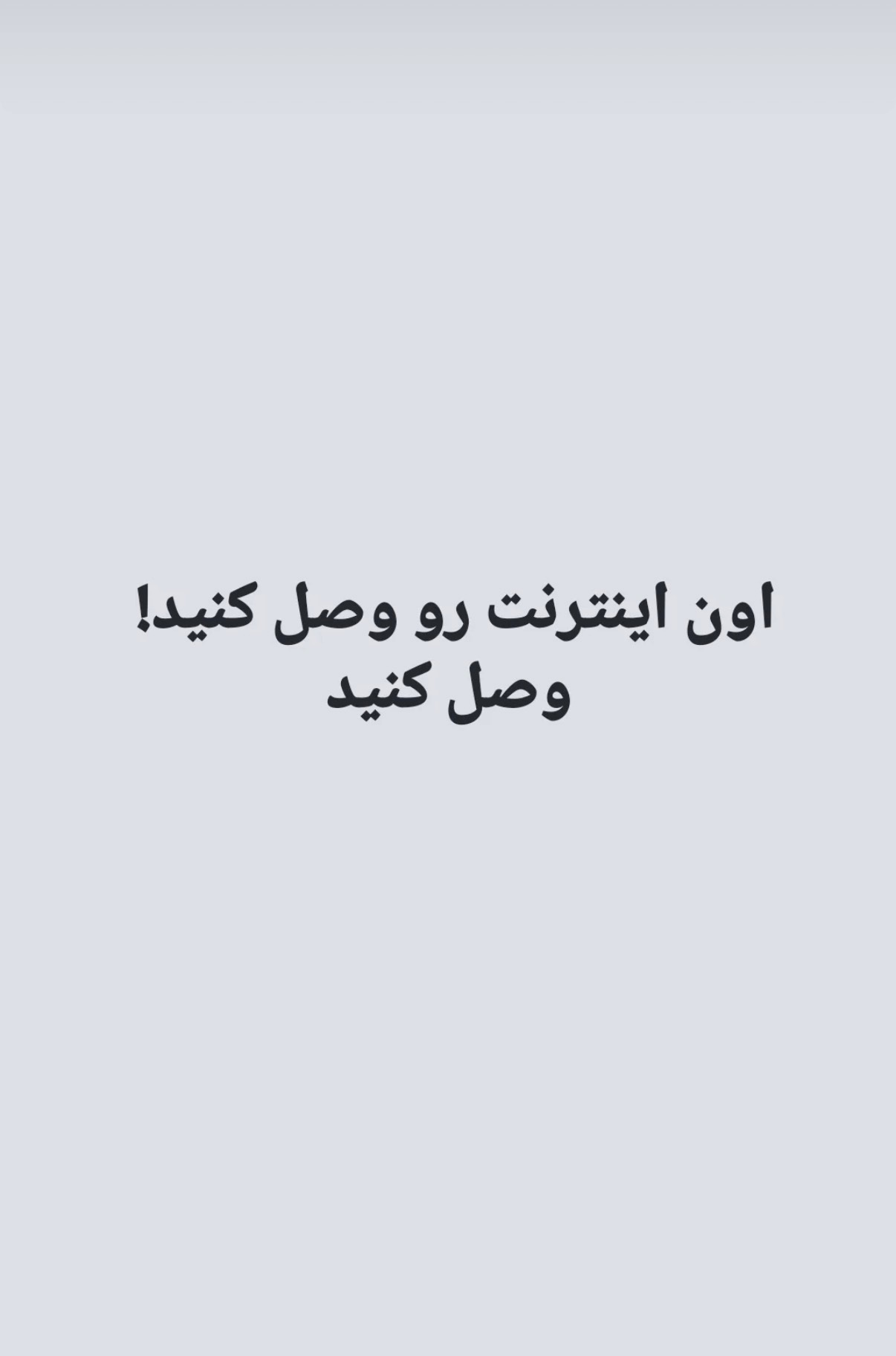
(From the instagram account of a journalist in Iran, which says: Connect that Internet! Connect it.)
On April 7, a ceasefire was announced in the US/Israel war on Iran, a ceasefire that did not include Lebanon but eventually led to a stoppage in the daily bombardment of Iran. Nonetheless, the internet and communications shutdown that began on February 28 continues. This continued shutdown diverges from the Islamic Republic’s own practices whereby after the ceasefire announcement of the 12-day war with Israel in June 2025, the internet was restored. It was also restored after 3 weeks in the aftermath of the January protests and the brutal crackdowns on January 8 and 9, 2026.
The ability of Iranians to access worldwide internet remains limited to whitelisted accounts and expensive black market proxy configurations. As the economist Mohammad Maljoo has written several times on his Telegram account during his own intermittent connection, this blockage has unequal consequences and extends Iran’s economic disparity to something as fundamental as internet access.
An important arena where the internet shutdown has had a devastating effect is on journalism, particularly print journalism. Iran’s media ecosystem is complex and precarious, ranging from official governmental channels to independent media, to “in-between” channels that are allowed to function but are not officially sanctioned, to numerous Telegram channels with thousands of followers that operate from inside the country, to those that operate outside but have domestic readers, to diaspora media. (I spoke to Bidoun a bit about some of the domestic media in an interview here.)
Below are translations of two important pieces from Iran that focus on the effects of the war and the ongoing internet shutdown on the ability of journalists to continue their vital work. The first piece was published in Shargh newspaper on April 6th and details the layoffs, newspaper closures, and the shrinking of the press in the Persian calendar 1404. It’s important to know that the year 1404 encompasses two devastating wars and the December/January protests and their subsequent crackdowns. The second piece is a statement put out by the Tehran Journalists’ Guild, a labor union established during Mohammad Khatami’s presidency, on April 9, 2026, warning against both the continued internet shutdown and the labor force reductions.
If there is one thing I want the readers of this Substack to always remember, it’s how crucial it is to understand Iran as it is, not as we imagine it to be. In translating these two pieces side-by-side, I hope what you take away is not just the difficulties of the work journalists and media do in Iran but the ways in which they continue to fight for and succeed in creating space for knowledge and debate despite these difficulties and at great cost to themselves.
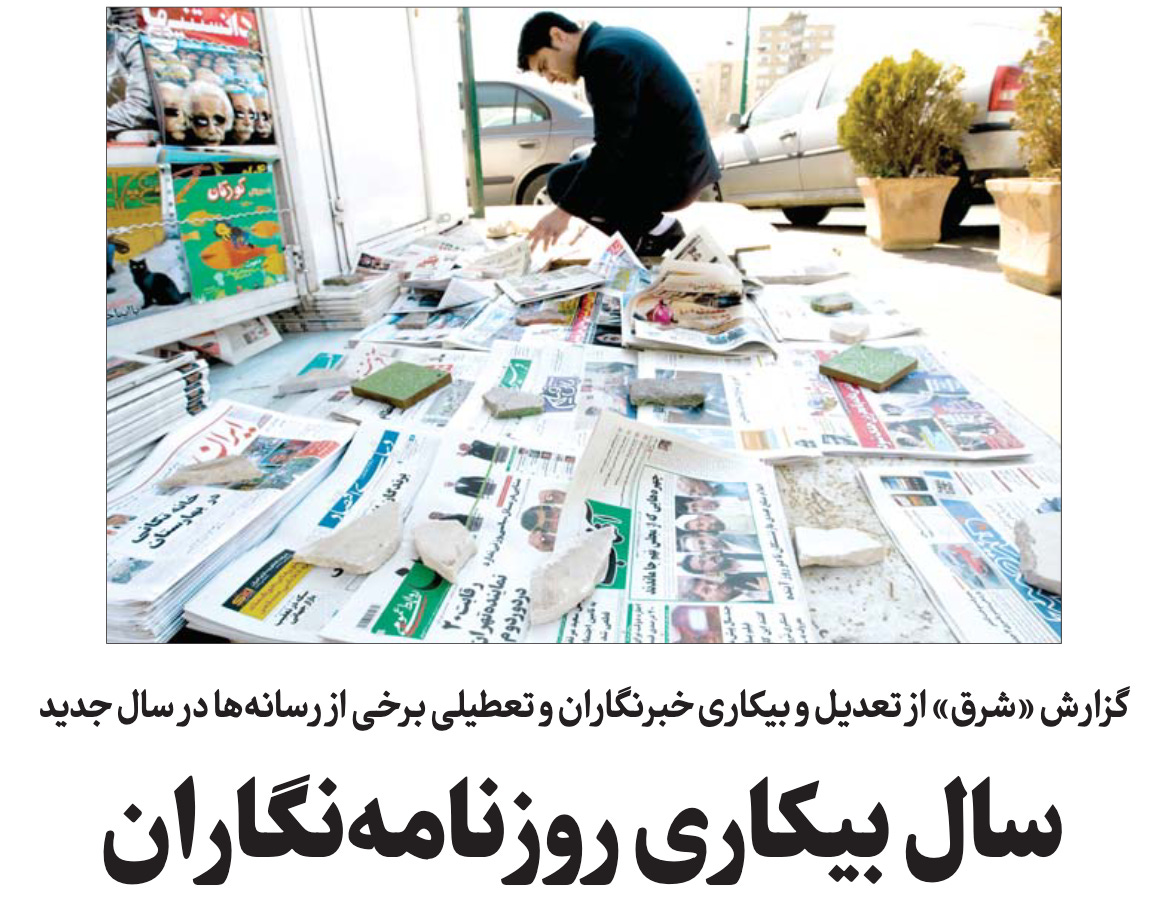
The year 1404 (2025 mostly) tragically ended for Iranian journalism; widespread layoffs, the closure of several newspapers, and the failure to pay the salaries of many journalists made the New Year’s holiday bleak for media professionals. Over a hundred staff members, including journalists and administrative personnel, were laid off from one of the largest private media outlets in the country, Payam-e Ma. On the other hand, Ham Mihan, which had previously built a strong reputation over the years, ended its operations until further notice, leaving dozens of journalists effectively unemployed. Meanwhile, Ham Mihan, which had already been shut down earlier due to judicial intervention, informed its reporters in the last days of Esfand (the last month of the Iranian calendar year) that it would no longer publish, and the Shabakeh magazine also announced that it would cease publication. Alongside all of this, several journalists from Aftab, Shargh, and other media outlets have reported not receiving their salaries and Nowruz bonuses for Esfand. Although the Press Department of the country claims to offer support, it seems that the blow dealt to the country’s press is irreparable, and the simple promises of support are not enough to address the extent of the damage.
The Shock of Layoffs in Two Media at the Same Time
Fatemeh Babakhani has been writing in various media outlets across the country for many years. Her area of expertise is the environment, and throughout these years, she has consistently focused on issues related to the natural environment of this country in her reporting. Now, she is one of the journalists who has lost her job. The first blow came when she learned that the newspaper Payam-e Ma1 would not be published until further notice:
“According to what the media managers told us, the newspaper, in the form it used to be published, will not exist until further notice. Of course, they explained that we could continue working as freelancers, and content would be published on the newspaper’s website. But it’s clear that with a freelance journalist’s salary, you can’t sustain a living. Especially in the current economic conditions of the society.”
Until this year, Babakhani worked simultaneously for two media outlets, and unfortunately, both of these outlets laid off staff. The second outlet she worked for, Donya-ye Eqtesad, where her job insurance was also covered, also made cuts:
“At the end of the year, the section editor gave us the news about staff reductions. Then, they called from Human Resources and told us that such a decision had been made, and the list of names was sent. Fortunately, I have the chance to keep my insurance through another media outlet, so I don’t have to resort to unemployment insurance.”
She explains that neither she nor the other staff members expected to face such a situation just a few days before the Nowruz (Persian New Year) holiday:
“We really didn’t think that instead of receiving our Nowruz bonus, we would be laid off. When the newspaper was closed, I had told myself that at least I worked for two outlets, so I would have at least one job. But suddenly, the news of the Donya-ye Eqtesad layoffs came, and it was very shocking.”
This journalist says that, apart from financial issues, the way the workforce was cut has long-term effects on the psyche and well-being of workers: “One aspect of this issue relates to financial and economic matters, which, of course, are not trivial. In the current situation, where everything has become significantly more expensive due to inflation, the economic aspect is not considered a normal issue in people’s lives. However, in the case of layoffs, it’s not just the economic dimension that pressures individuals. The feeling that suddenly you, as a skilled human resource, are being sidelined, jeopardizes the well-being and mental health of individuals, and disrupts their entire lives. There was a time when layoffs in media had significant reverberations. But now, these behaviors and approaches seem completely normalized.”
Unemployment on the Eve of the New Year
Mojgan Mirzaei, a veteran economic journalist, stopped working with Donya-ye Eqtesad last winter. She now talks about the situation at the outlet:
“We knew there were plans for layoffs. There had been rumors circulating for months within the organization. But no one imagined that the management would make such a decision just before Nowruz. Everyone thought that if such a decision was to be made, it would be after the 13th of Farvardin (the end of Nowruz holidays). So, it was accompanied by a wave of surprise and, of course, disappointment.”
She also acknowledges that the situation is difficult for the media managers as well:
“Of course, we journalists also know that the economic conditions for media managers are not favorable. There has been a reduction in liquidity. The income from advertisements had also decreased in recent months. This has affected the overall income of the newspaper. As a result, it seems that the easiest way forward was to lay off staff.”
Referring to the number of employees who lost their jobs at Donya-ye Eqtesad, she explains:
“We don’t have an exact number, but based on what we saw and heard, around 70% of the staff has been laid off. About 50 journalists from the newspaper itself were let go. Dozens of administrative staff were also affected. There were also a few layoffs from the Echo section. Additionally, the newspaper, which used to be published with 32 pages, was reduced to 16 pages, which is also an unfortunate event for the country’s press.”
According to Mirzaei, this decision could set a precedent for other media outlets:
“Donya-ye Eqtesad is arguably the largest private media in the country. It’s a large outlet that employed a lot of people, and many journalists have worked there over the years. This decision, with such a large-scale impact, could lead other media outlets to follow this approach to cut their costs. It’s clear that in these economic conditions, media managers may think, ‘If I can produce a newspaper page with just one person, why should I be responsible for the salaries and insurance of several people?’”
This journalist concludes by highlighting the lack of support from relevant institutions:
“Journalists have been struggling with difficult living conditions for years. Newspapers have been shutting down one by one. Salaries have decreased and decreased. Gradually, media managers started refusing to insure them, and if it weren’t for organizations like the Sandoq-e Honar [Art Credit Fund was established in 2004 and is under the supervision of the Ministry of Culture. Among its responsibilities is to provide insurance and support to unemployed journalists, artists, and writers] providing insurance for journalists, many would have to work without insurance. Even now, most of them are insured at a basic level and don’t receive quality insurance. Professional associations have also significantly weakened in recent years, and the current guild really doesn’t do much to improve the living conditions of journalists. The Ministry of Culture and Guidance mainly interacts with media managers, not journalists. That’s why journalists in this country are practically working without any supporting organizations, doing one of the most difficult jobs in the world.”
However, the damage to the media does not end with layoffs. Some media outlets have also refused to pay the salaries of their staff for the month of Esfand (the last month of the Iranian calendar year). Reports indicate that several news agencies and newspapers have not paid the salaries of their employees for Esfand, nor have they given their staff Nowruz bonuses. One of the journalists who wished to remain anonymous said that they were simply told: “We don’t have money!”
Unremitting Pain
Hooman Azimi, the Director-General of Domestic Media and Press, talks about the economic challenges that media outlets have faced, which have intensified since last year. He tells Shargh:
“We have been dealing with this problem since last year and have tried to monitor all developments around this issue. The current economic problems in the country, combined with sanctions and the war, have created additional pressure on media professionals. Now, the increase in the minimum wage by 60% has caused serious concern for media outlets that lost their income last year.”
Azimi, listing the supportive measures for media outlets, continues:
“There have always been various supportive measures on our agenda. For example, the head of the Press Department has emphasized supporting media outlets that employ more staff and provide them with insurance. We wanted to support the employment of journalists. Government advertising is also part of our work, which helps media managers and their revenues, and can cover a significant portion of expenses. Amid this crisis, the Minister of Culture and Guidance visited the Press Department and decided to update the rates of these government ads from the beginning of the year and increase their amount. It was important that the income from these ads remain the newspapers’ revenue streams.”
The Director-General of Domestic Media also mentions special support related to the war: “There was also the decision to provide special subsidies to media outlets that have been covering the news despite all difficulties and risks during the war… Just like we did during the 12-day war. Utilizing the Sandoq-e Honar’s insurance provisions, as well as unemployment insurance for those who lost their jobs, is also part of these support measures during the war.”
Azimi concludes by explaining that the Press Department’s guidelines emphasize ongoing support for human resources:
“In the guidelines we send to media outlets, we stress that reducing staff or eliminating positions should not be their first option. Reducing the number of newspaper pages, focusing more on digital versions rather than print versions, and cutting or eliminating other indicators are better solutions for managing costs and saving resources because layoffs and dismissals also harm the creative and intellectual process.”
In a situation wherein the country needs professional, responsible, and reliable media more than ever to strengthen national unity and enhance public awareness, the ongoing economic pressures and infrastructural limitations have posed serious challenges to the survival of both print and online media, as well as the livelihoods of journalists. If this trend continues without attention, it could lead to the weakening of the country’s social and media capital.
The Tehran Journalists’ Guild, understanding the sensitive conditions of the country and the necessity of the media’s cooperation in fulfilling their national role, believes that the sustainability of the media is an inseparable part of social and economic stability and security. However, evidence on the ground indicates that, in recent months, the exacerbation of financial problems of media institutions, alongside a significant increase in production costs, especially in the areas of paper and printing, reduced revenue sources, particularly in advertising, and disruption in access to internet communication infrastructures, have created additional difficulties for the operations of many media outlets.
In this context, communication restrictions and the cutting off of international internet access have had even deeper effects on the performance of online media. The disruption of access, the limitation of some communication platforms, difficulties in publishing and distributing content, and disruptions in two-way communication with audiences have effectively disrupted some of the core functions of digital media. This situation has not only reduced timely information dissemination and professional competition, but also led to a noticeable decline in viewership, reduced traffic and advertising revenues, and weakened the position of domestic media in the information space.
As a result of these conditions, some newspapers have been forced to reduce their volume and the number of pages, while several other media outlets have limited or ceased their operations. Simultaneously, internet-based media have also faced decreased efficiency and income due to reduced audience access.
The concerning consequence of this trend has been the emergence of a wave of workforce reductions in the months of Esfand and Farvardin [March and April roughly], leading to the unemployment of some journalists and media professionals. This not only adds to the economic pressures on this group but also results in the loss of some of the country’s professional capacity and valuable media experience.
It is evident that under such conditions, the continued operation of professional and independent media requires at least the minimum necessary economic and infrastructural support. Ignoring this necessity limits the media’s ability to perform accurate and timely information dissemination, and it can also create a foundation for a decrease in public trust and the weakening of responsible information flow.
Since the Tehran Journalists’ Guild became aware of the difficulties faced by media colleagues (last March), the guild’s board president has contacted some relevant media managers and explained the difficult situation in the country and urged them to stop or at least delay the workforce reductions until the new year. Unfortunately, these requests and consultations have yielded limited results.
Therefore, the Tehran Journalists’ Guild, while emphasizing the need for media support, draws the attention of relevant authorities to the following issues:
Immediate measures to manage and reduce the costs of paper and printing supplies for newspapers.
Facilitating sustainable access of online media to communication infrastructures to maintain effective contact with their audiences.
Designing and implementing support mechanisms to prevent layoffs and assist unemployed journalists.
Strengthening constructive dialogue with media trade organizations to utilize expert capacities in managing the current situation.
The Tehran Journalists’ Guild, while emphasizing the responsible and professional approach of the media, declares its readiness for any cooperation that may improve the situation for its colleagues and hopes that effective and timely decisions will be made to preserve and strengthen this vital pillar of society in light of the current conditions.