
Five Films About Iran's Jonoub [South]
As the United States intensifies its bombing campaign in Iran's south, some films that illuminate the histories, cultures, and everyday lives of the people who call it home.

“The President’s policy is a head for an eye. I mean, honestly, that’s what it’s going to be. I mean, they will pay a very heavy price for the things they’re doing. They’re already paying a very heavy price…Despite all that bravado, they are suffering tremendously, and they’re going to suffer more until they come to their senses. They’re not there yet, unfortunately.”
US Secretary of State Marco Rubio, July 23, 2026
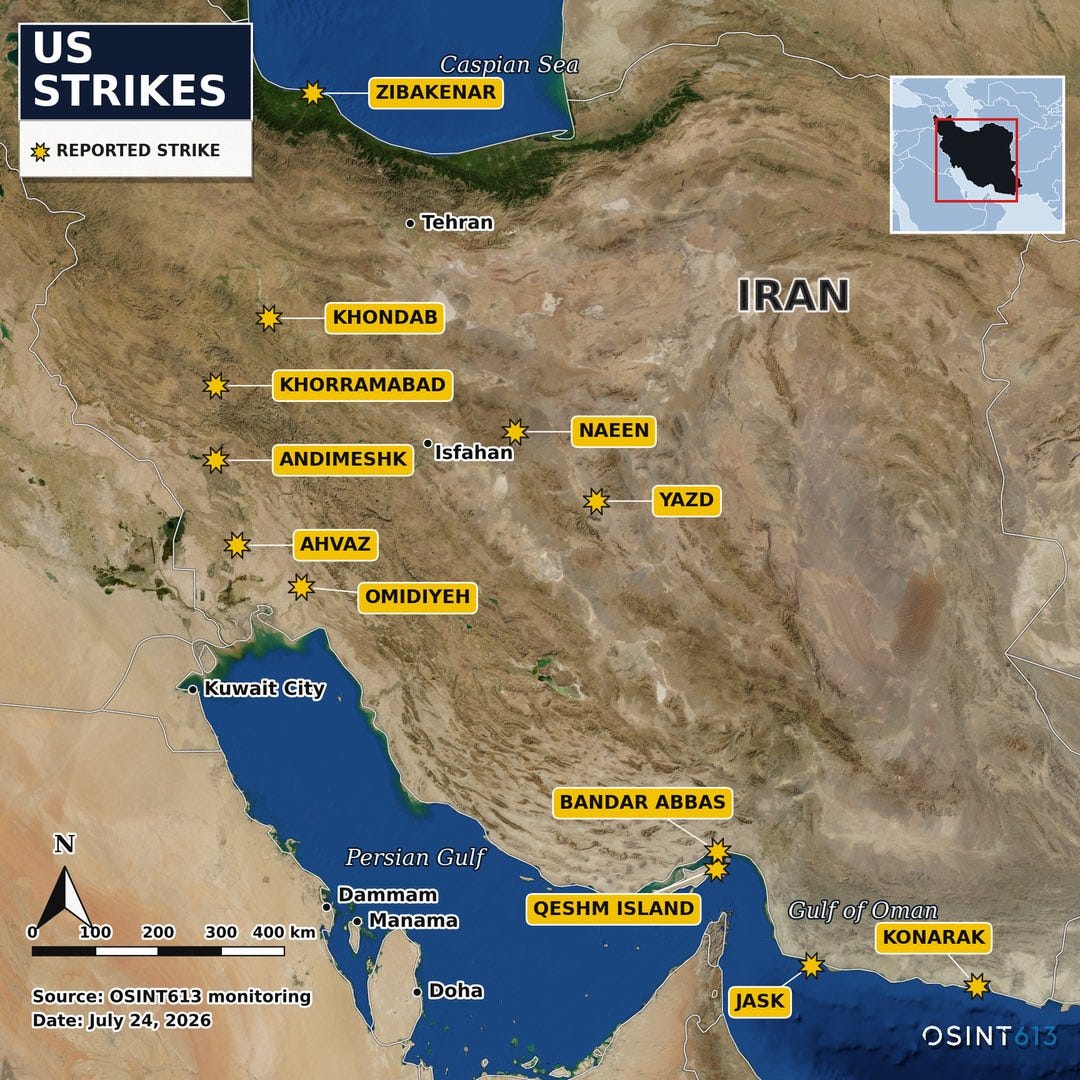
“Jonoub,” [literally “the south”] in Iran constitutes roughly the area spanning from where the map above says “Ahvaz” to where it says “Konarak.” It roughly corresponds to four provinces in Iran going West to East: Khuzestan, Bushehr, Hormozgan, and Sistan-Baluchestan.
Since the resumption of the US-Iran war around July 9, this area more than any other has been bombed by the United States. (It bears remembering that Iran has been retaliating by attacking Bahrain, Kuwait, Jordan, and Iraq.)
This post is not an analysis of this new phase of the war nor a speculation about its end. It is a reminder that Jonoub is filled with people with a history and a life that continues under war and under immense summer heat with temperatures rising up to 120 F.
They are paying a heavy price. They are suffering tremendously. Theirs is the head taken for an eye.
To get a sense of those who populate this place, here are some film recommendations focused on Iran’s Jonoub suggested by my wonderful friends and colleagues. If you know Iranian films, then you know I’ve left out so many well known titles: From Bahram Beyzaei’s Bashu to Ibrahim Golestan’s documentaries on oil, to the 3 episode film The Tales of Kish. Feel free to drop links to those films or recommend more movies in the comments section. Preferably films that can be streamed and have subtitles.
For the films below, you can access the link to stream the film by clicking on the title. Some of the films require a fee or a subscription to a streaming site. Some just require you to sign up for free. I have also added trailers under the descriptions for those that had them.
A Handful of Films About Iran’s Jonoub
Dingomaro: Iran’s Black South (2013/2014, dir. Kamran Heidari) is a documentary set in Hormozgan province. The film follows Hamid Said, a jonoubi black musician (descendants of slaves and merchants from Africa), who travels the region on a motorcycle to “organize a concert with the best black musicians in the country.” The film is a beautiful and joyous tribute to the area’s music, its ethnic diversity, and the dream of Hamid Said who died in 2020 at the age of 53. According a short obituary in the newspaper at the time, Said suffered from high blood pressure and diabetes, and had neither insurance nor a pension by the time he passed away. Below is a link to the film’s trailer.
About Love on a Small Island (2019, dir. Elaheh Habibi)
Last night the tiny island of Qeshm was pounded by the US. This documentary is set on Qeshm. According to the description on the fantastic Iranian documentary streaming site Docunight: “this ethnographic film intimately follows the everyday life of Saleh and his two wives, Miriam and Ayesheh, as they navigate an unconventional cohabitation shaped by love, tradition, and social expectation. After a dramatic romantic entanglement altered the course of their lives, the three now share a modest rural home, offering a rare and nuanced glimpse into the complexities of marriage and emotional intimacy in an Islamic cultural context.”
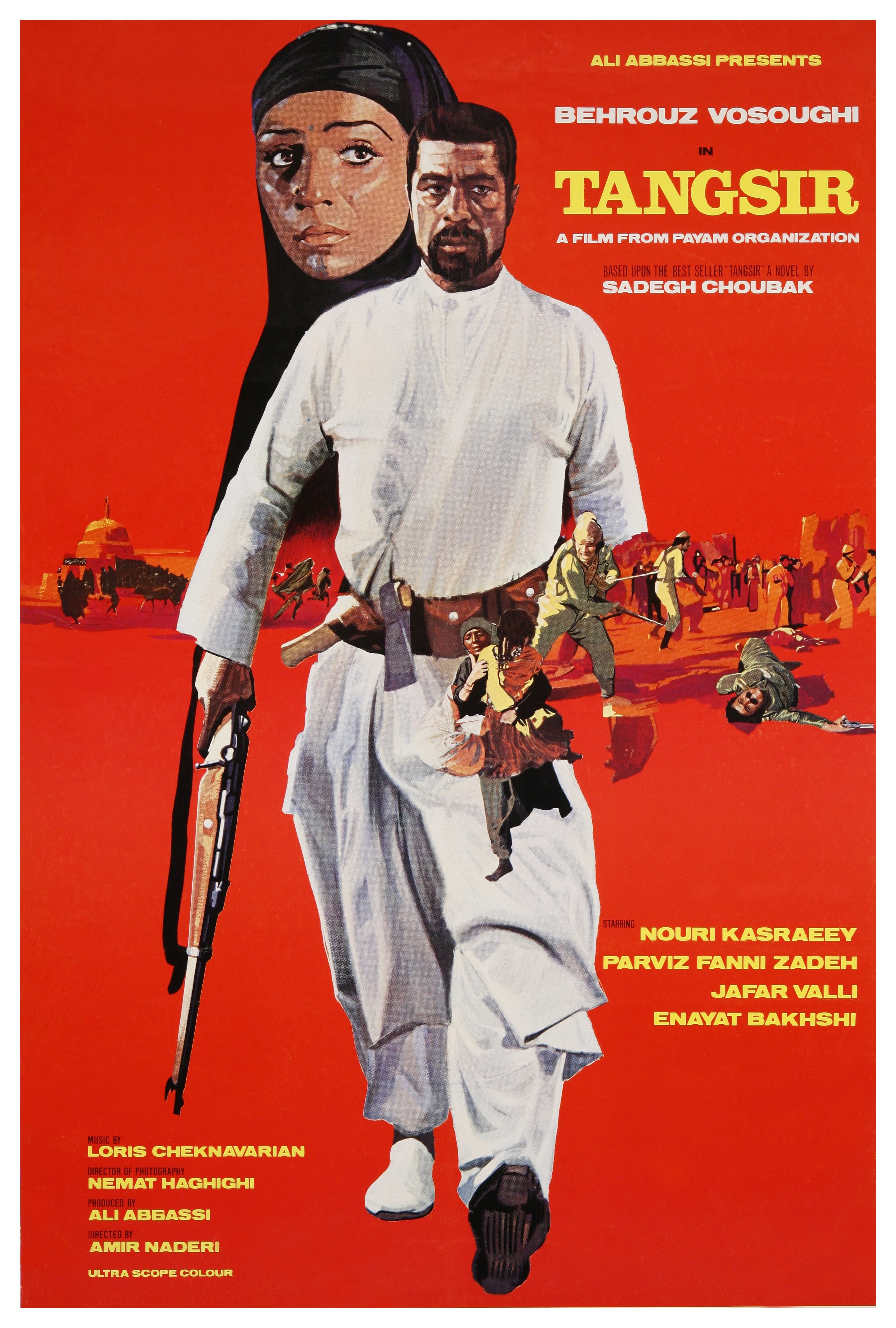
Tangsir (1973, dir. Amir Naderi)
Tangsir refers to the people from Tangestan, a coastal region of Bushehr, who historically played an important role in anti-British resistance during World War 1. This feature film by Iran’s celebrated director, Amir Naderi, is based on a novel by Sadeq Chubak (1963) and stars Behrooz Vossoughi, the heartthrob and beloved actor of the period. Vossoughi plays a poor but honest man named Zar Mohammad who is cheated out of his hard earned savings by 4 figures of authority, and who in response then sets out to exact revenge on them. Set in 1935, the film draws from both the area’s history of anti-colonial resistance and also was seen as an allegory for the 1970s’ corruption and the spirit of revolution.
The Runner (1984, dir. Amir Naderi) The film follows Amiro, an orphaned boy surviving on the streets of the southern Iranian port city of Abadan as the war with Iraq rages on. Scraping together a living by collecting bottles, shining shoes, and selling ice water, Amiro dreams and dreams. And runs and runs. The film draws on some of Naderi’s own childhood memories of growing up poor in Abadan. I so clearly remember seeing the film when we lived in Iran during the war with Iraq. My favorite teacher would play the iconic sequence at the end of the film in class with sound off and show us how Naderi edited the sequence to the second movement (Allegretto) of Beethoven's Symphony No. 7. In preparing for this post I tried to rewatch it but I teared up (and I’m just so tired of crying) so I stopped but I hope you watch it to the end.
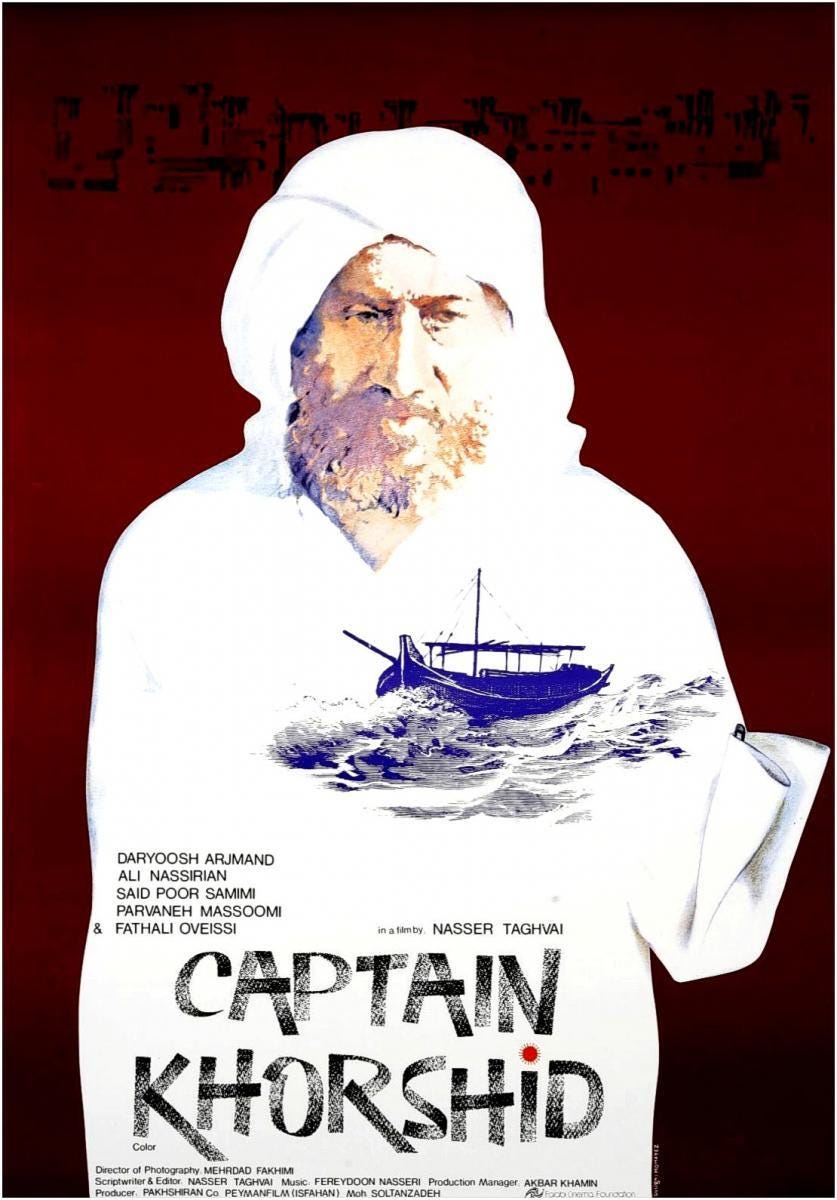
Captain Khorshid (1987, dir. Nasser Taghvai) The story of a one-handed sailor who gets pulled into smuggling people and goods along the Persian Gulf, the film is Taghvai’s adaptation of Ernest Hemingway’s To Have and Have Not, set in the south of Iran, where he was born. The film won the Bronze Leopard at the Locarno International Film Festival in 1988.
If you found this useful and want to learn more, click see:
“The Future as a Casualty of War: Iran’s Students Between Missiles and Exams:” A Translation of an on-the-ground report of the state of exams and educations of students in the south published in Hammihan newspaper.
and
My recommended list of books by various scholars that can help you better understand Iran.
Thanks for sharing the story of Iran.